Ladybug's Garden Memory Game Review: A Tiny Garden That Teaches Focus and Turn-Taking
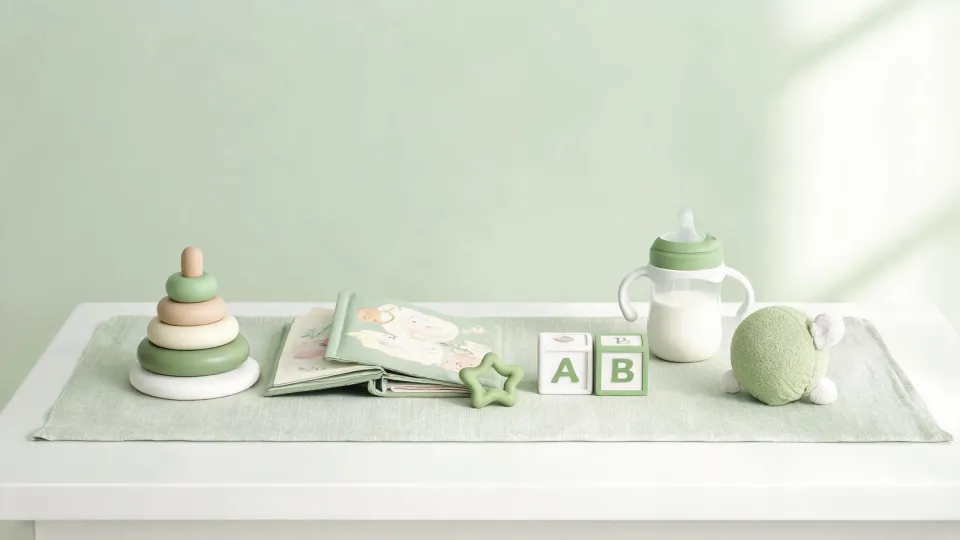
At the end of a long preschool day, the dollar-store deck you grabbed as a stopgap finally falls apart: a card bends, the toddler loses interest, and the game becomes a mess on the floor. You start hunting for something else, and the small box with ladybugs and flowers keeps surfacing. It looks simple enough to be worth one more try.
First Sight: A Tiny Garden in a Box
The package arrives on a wet Tuesday, and for once no one is asking for a snack. You slide the Ladybug's Garden box out of the shipping bag and notice two things at once: it is small, and nothing inside rattles. The lid opens easily, and the cards are not the thin rectangles you expected; each is shaped like a flower, with a tiny bug or leaf printed on its face. Your daughter pulls one out, turns it over, and giggles at the ladybug hiding underneath. She puts it back not because she understands the rules yet, but because the pieces invite touching. The whole garden fits on the kitchen table in a neat ring, and resetting takes less than a minute—turn the flowers face down and start again. In that first minute, the game has already solved the problem that pushed you away from the cheap deck: it is sturdy enough to handle, simple enough to see, and small enough for a child to own.
Fat Brain Toys is not an accidental seller. Its homepage describes the company as the toy specialist, with a mission to enrich families and offer a smarter way to play. That could be easy to ignore if the same page weren't full of concrete promises: a flat shipping rate of $7.99, free shipping on orders over $99, and a 10% discount for first-time subscribers. Those offers make it easy to test a product you haven't seen in a store. The bigger cue, though, is the company's stated purpose. It says it designs and curates toys that spark creativity and curiosity, and it frames that work around developmental goals. That tells you Ladybug's Garden comes from a place that thinks about how young children play, not from a bin of identical generic decks.
What Kind of Play Is This, Really?
Strip away the flowers and you have to ask what a memory game actually teaches a preschooler. The answer is thicker than matching pictures. When the child holds a hidden image in mind and scans the other cards, that small act is working memory in motion. When she waits for another player to take a turn, she practices impulse control. When she finds a match and grins, the reward loop tells her brain that focusing pays off. A game this simple can feel like nothing more than cute practice, but the minutes it fills are dense. For a three- or four-year-old, staying with a task until a pair appears is a kind of concentration that doesn't show up overnight. And unlike a screen, Ladybug's Garden asks her body to join the thinking: fingers flip, eyes compare, a small voice announces 'got it' before reaching for the next bloom.
Turn-taking is where the real social work happens. A young child often knows where the matching card is but still has to wait while the other player goes first. That waiting is the hidden lesson. In one short round, the child must remember the picture, follow the order, tolerate someone else's turn, and recover when she misses. Each of these is a separate ability. Ladybug's Garden keeps the turns short enough that a miss does not feel like failure; it feels like a reason to stay in the game. The garden theme also gives each card a name a child can say, which makes the memory easier to grasp. A pile of plain red squares would make the same exercise feel abstract and discouraging. By tying the images to a small world, the game turns concentration into something a preschooler chooses, not something that is demanded.
The Dollar-Store Deck Trap
There is a strong temptation to believe that any memory game is equally good. The mechanics look almost identical: flip two cards, hunt for a pair, keep the ones you match. When a dollar-store deck costs a fraction of Ladybug's Garden's price, the reasonable-sounding move is to skip the branded version and buy the bargain. That instinct fails in a specific way. A memory game is only as good as its pieces and its layout. If the cards are flimsy, they slide when touched. If the design is cluttered, a preschooler cannot see the patterns. If resetting requires adult help, the child loses the independence that makes play feel like play. Cheap decks often miss on all three.
Fat Brain's own catalog draws the same line. The words the company uses for its products highlight high-quality materials and storage that is integrated into play rather than an afterthought. Those details matter when a child plays with a deck whose cards bend at the first shuffle. The catalog page also places Ladybug's Garden Memory Game in the same collection as PlayTab and Air Toobz, toys built around developmental stages rather than around whatever looks cute on a shelf. The company's tagline about smarter play comes from its own welcome page, so the claim is not invented by a reviewer. In that light, the difference between this game and a cheap deck is not theme or number of tiles. It is whether the game expects a child to adapt to it, or whether the game adapts to the child. Dollar-store decks test a child's patience before testing memory; a game designed around a preschooler's hands removes that obstacle. That single shift explains why some rounds end in laughter instead of tears.
A Side-by-Side on the Kitchen Table
Lay both out on the table and the gap shows up in the first minute. The dollar-store cards scatter because they are slick and light; your daughter has to cup her hand around one just to flip it, and when she does, the cards next to it shift. Ladybug's Garden's compact flower cards sit flat and turn with one finger, so the round stays a game of memory instead of a balancing act. The bigger difference comes after a match. With the cheap deck, resetting means collecting slippery rectangles, straightening bent corners, and rebuilding a grid; most four-year-olds walk away before that is done. With the tiny garden, every flower goes back into the same small space, and the child can reset the whole game by herself.
The purchase decision gets easier once you look at Fat Brain's support offers. Standard shipping is a flat $7.99, and orders of $99 or more ship free, so if you are already buying another toy, Ladybug's Garden can ride along without adding delivery cost. First-time customers can also get a 10% discount code, which trims the cost of an unfamiliar brand. Those numbers do not make the game as cheap as the dollar store, but they change the calculus. You are no longer weighing $3 of certain frustration against $25 of uncertain quality. You are weighing a game a preschooler can run independently, sold by a store that speaks in clear shipping terms and gives new customers a reason to press buy. For a parent shopping for a three-to-five-year-old, the rule is simple: when independent setup and lasting pieces matter more than the lowest price, Ladybug's Garden wins.
Week One Verdict
A week later, the real test is whether the box comes out after school. On day five, your daughter carries it to the table herself, sets out the flower cards in a rough circle, checks each one is face down, and calls that she'll be the ladybug this time. The rules are still softly enforced—sometimes a card flips while she is reaching for it—but she doesn't call you over to fix every mistake. She misses a pair, shrugs, and tries again. When the game ends, she gathers the cards and puts them back in the box without being asked. It was not a perfect week; on Monday the flowers ended up under the couch. But the recovery was part of the lesson. For a child who abandoned every previous deck, that small routine is the real outcome. The game lasted long enough for her attention to last too, and by Friday she was announcing matches before the cards were fully turned.
The verdict after week one is that Ladybug's Garden Memory Game earns its place through ordinary moments, not through advertised magic. It teaches focus and patience because it gives a preschooler a reason to keep trying, and it teaches turn-taking because the turns stay short enough to tolerate. Fat Brain's own welcome page promises a smarter way to play, and that phrase lines up with what happened at the table. The game fit into the rhythm of a young child's afternoon without a grown-up managing every move. If your child is between three and five and ready for matching games, the slight premium over a generic deck buys lower frustration, easier setup, and a brand that stands behind its box. The garden may be tiny, but the lesson it leaves behind is not; it is the quiet confidence a child feels when she can start and finish a game by herself. That confidence keeps the game on the shelf long after the novelty fades.
By the second Sunday, the little flower box has a permanent spot on the playroom shelf, and your daughter no longer asks for help before starting a round. That, more than any free-shipping threshold, is the reason the tiny garden matters.

Miriam Adler
Miriam Adler is an educational and STEM toy analyst specializing in busy boards, Montessori-style manipulatives, learning towers, sound books, reading pens, pretend-play sets, and early learning toys. She applies ASTM F963 and IEC 62115 methods while evaluating small-part hazards, accessible edges, switch durability, sound output, battery access, pull force, and age-appropriate task complexity. Her work helps parents, retailers, and product teams choose learning products that align developmental goals, supervision needs, interaction design, and the intended age stage.
Leave a Reply