The Ladybug's Garden Memory Game and the $99 Cart That Decides the Order
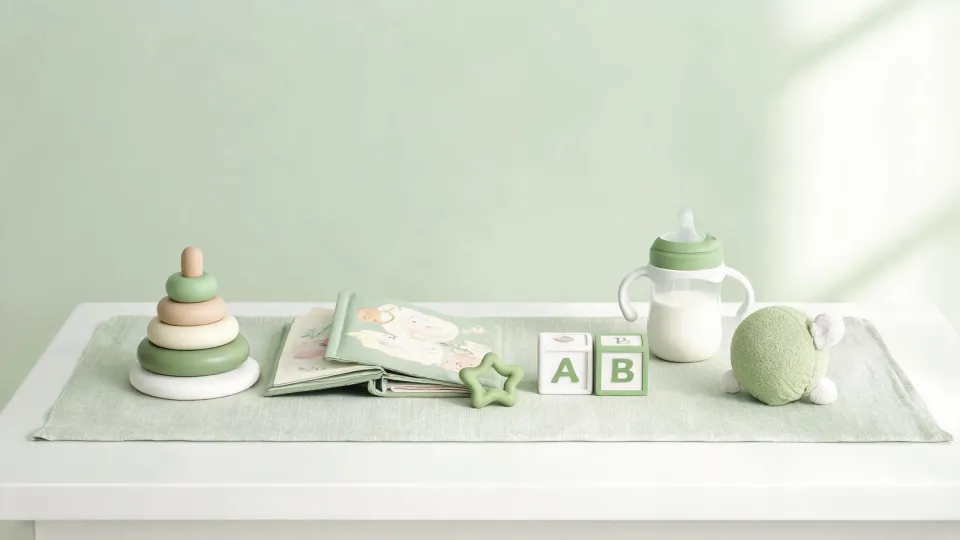
A birthday list arrives with one product name on it: Ladybug's Garden Memory Game. There is no size, no age band and no note about what the child already plays with — just a name forwarded from a classroom list, a grandparent's text message, or a screenshot pasted into a notes app. So the search runs the way most gift searches run: type the name, land on the store's page, and start reading. Fat Brain Toys answers that search with a storefront built for Christmas, Hanukkah and birthday shopping — and with a page that does not put the memory game alone in a spotlight. What appears instead is a shelf.
A Birthday List, a Beetle, and One Listed Product
That shelf is specific. The page lists Ladybug's Garden Memory Game beside PlayTab, the modular sensory activity board for babies and toddlers, beside the Air Toobz Mega Run Distance Kit, beside My Auto Shop Engine Builder and the Sky Surfer Airplane Launcher, and beside a Pretendables line the store describes as pretend play parents actually want for their children. Above those items sits the store's own navigation: Shop by Developmental Goal, the Fat Brain Collection, and top categories covering building and construction and classic and retro toys. Nothing on that page says which item suits one particular child. It says which items Fat Brain Toys chose to shelve together, which is a weaker statement — though the listing does confirm the game is a first-party catalog line rather than an unlisted third-party item with a borrowed name.
Which leaves the question a buyer has to answer before anything goes in the cart: not whether the game exists on a reputable store, but whether it fits the child in front of them. A catalog entry reads like an endorsement, so that distinction is easy to skip. Three checks do the work. First, what the child already does for fun — build, pretend, sort, launch, or sit with a rule? A memory game rewards watching, holding and matching; a building set rewards stacking and rebuilding. Second, who is buying and when: a birthday three weeks out is a different problem from a holiday list written two months early. Third, what else is already in the cart, because on this store the second item changes the arithmetic more than the first one does.
How This Store Sorts Toys: Developmental Goals, Not Age Bands
The store's own layout explains why the shortlist looks crowded. Fat Brain Toys puts Shop by Developmental Goal and the Fat Brain Collection in the same header that carries its banner offers, so the primary sort is purpose and shelf rather than age band. There is no age ladder to walk down. A memory game shares one budget line with building and construction, classic and retro toys, pretend-play sets and sensory boards, and any of those could reasonably go to the same child. That matters because a shopper who assumed the store sorts by age will compare the wrong items. The same header also advertises a $7.99 flat shipping rate before any product has been chosen, and a browsing-history panel that assumes several items are compared in one sitting.
One phrase does the quietest work on the page: Curated Entirely by Our Customers. It repeats across the storefront header, and it is easy to read as proof that someone like you already tested this specific game with a child like yours. The wording does not say that. It describes how the store assembles its lists, and the same header block carries the store's own promotions and category links, which are brand decisions rather than customer reviews. A curated shelf is social proof about taste and popularity; it is not a per-product test and not an age-fit certification. A buyer who treats a curation badge as a fit guarantee skips the only check that matters — what this child already picks up twice.
Memory Game or Building Set? The Comparison the Buyer Actually Runs
Run the comparison the page implies. On one side sits the memory game: a small, quiet item whose value is in repetition, where a child either enjoys the loop or drops it after two rounds. On the other side sits PlayTab, described as a modular sensory activity board for babies and toddlers, which keeps changing configuration as hands get steadier. Beside that sit the Air Toobz Mega Run Distance Kit and the Sky Surfer Airplane Launcher, both trading on motion and cause-and-effect. And then the Pretendables line, which the store presents as pretend play with high-quality materials, functionality built for play and storage worked into the set. Each sibling answers a different question: sensory exploration, launch-and-chase energy, or narrative play. The memory game answers one — will this child sit with a rule?
The tiebreaker is not which item the store lists first; it is what the child already reaches for. If the child lines up toy cars by color, hunts for missing pieces and asks to play the same board again, a memory game is a reasonable purchase and the repetition is the point. If the child's energy is motion — launching, toppling, chasing — the launcher kit or the Air Toobz run kit fits the same developmental-goal shelf better and will get picked up more often. If the child narrates everything and feeds stuffed animals, the Pretendables line matches the shelf instead. The buyer is not choosing the best toy on the page; they are choosing the item that survives a Tuesday afternoon, the one test the storefront cannot run. Fit decides the item, and the item decides what the rest of the cart has to do.
Cart Math: What the Order Actually Costs After Thresholds
Then the money. Two shipping rules sit on the storefront banner: free shipping on any order of $99 or more, standard shipping only, qualification based on the final subtotal, with drop-ship items and orders shipped outside the 48 contiguous United States excluded; and a $7.99 flat rate for everything else. Against a single memory game, the flat rate is the likelier outcome, so the honest price of buying just the one gift is the item plus $7.99. Then the offers arrive. A 10% first-order discount comes by email after subscribing and expires December 31st, 2026 at 11:59 P.M. CST. A one-hour shopping session gives 15% off the whole order with no code. A Pretendables promotion runs 20% off that line with a free apron, expiring August 10th, 2026 at 11:59 P.M. CDT.
Here is the assumption that costs money: that the biggest advertised percentage simply applies. Each published offer carries its own terms. The first-order 10% is valid on a customer's first purchase only, excludes gift cards and LEGO Systems products, and stands alone. The one-hour 15% is single-use and cannot stack with anything else. The Pretendables 20% covers Pretendables products only and carries the same no-stacking rule. So the cart does not stack those percentages into one large discount; a shopper takes one offer. That is also why splitting an order is a trap: the discount belongs to a single purchase, so the second half pays full price. Immediately a threshold question follows — add a second item to clear $99 and free standard shipping, or keep the cart small and take the first-order code.
The Order Goes In, and One Claim Still Needs a Primary Doc
The order goes in against a decided threshold. If the memory game is the fit, it ships at $7.99 flat rate unless a second item joins it; if a sibling item is the fit, the same shelf still holds it and the buyer is only out a little research time. What remains is a verification list rather than a shopping task. Families in this category already read that way: a CDC update on cleaning breast pump parts changed an everyday routine for many parents, arriving after the products were already in the house. Material, cleaning and safety claims deserve the same treatment. The store page states catalog and policy facts, and it does not state what the game is made of or how it should be cleaned.
So the reusable rule is narrow. Treat a store page as an index of what exists and what it costs; treat published guidance as the place where material and care claims get checked. That habit already runs through this category: revised CDC pump-cleaning guidance showed that official instructions get updated long after a routine has settled, and that the update itself, not a summary of it, carries the authority. The same instinct applies twice here: to fit, where the storefront offers a developmental-goal label but no child profile, and to money, where the page offers thresholds and single-use offers but no advice on which to take. The case closes with a short list — fit from the child, $99 or $7.99 from the cart, material claims from a primary document.
The confirmation page settles it: one gift, one shipping rule, one offer. The game was never the hard part of this order — the shelf, the threshold and the single-use terms were, and the next buyer can run the same three checks in a single cart session.

Miriam Adler
Miriam Adler is an educational and STEM toy analyst specializing in busy boards, Montessori-style manipulatives, learning towers, sound books, reading pens, pretend-play sets, and early learning toys. She applies ASTM F963 and IEC 62115 methods while evaluating small-part hazards, accessible edges, switch durability, sound output, battery access, pull force, and age-appropriate task complexity. Her work helps parents, retailers, and product teams choose learning products that align developmental goals, supervision needs, interaction design, and the intended age stage.
Leave a Reply