Fat Brain Toys Quubi Cube: Is It the Right Learning Toy for Your Baby?
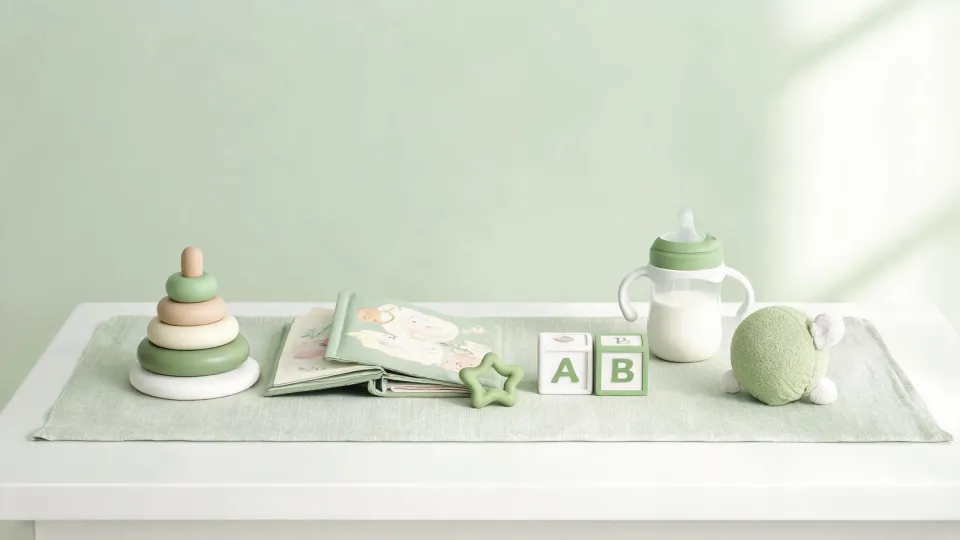
You’re weighing the Fat Brain Toys Quubi Cube against cheaper toys in your cart. It promises 'learning' but costs more, and your 8-month-old might lose interest in a day. You want the best start but also don’t want to waste money on another plastic object that ends up in a bin. This is the choice dilemma: how do you pick a toy that genuinely supports development instead of one that just looks good in a catalog?
The Real Choice: Another Toy or the Right Toy?
Your baby finally gets the cube, turns it over, mouths a corner, then drops it for a crinkle toy. You wonder if you just wasted money on a toy that doesn’t hold her attention. The problem isn’t the toy; it’s that you haven’t defined what 'worth it' means for her stage. Most parents compare features or price, but that doesn’t map to development. A better starting point is asking what your baby is working on right now—sensory input, hand strength, or cause-effect—then checking whether the toy supports that goal before you look at anything else. This shift from feature-counting to goal-matching is the core of the article.
The real question isn't 'Is Quubi Cube educational?' but 'What will it cost me, in time and money, and does that buy the right experience?' The brand's own logistics tell you part of the story: Fat Brain Toys charges a $7.99 flat shipping rate, which is reasonable for a single item, and offers free shipping on orders over $99. They also give 10% off your first order if you subscribe. These details change the math—a $30 toy might become $37.99 with shipping, or you might bundle it with another item to get free shipping. So before you decide, you need to know the final price after those policies, and then weigh that against whether the toy truly matches your baby's development.
Fat Brain Toys’ Promise vs. Your Baby’s Goals
Fat Brain Toys makes a promise you can use as a screening tool. On their official page, they define their mission as enriching families and providing 'A Smarter Way to Play' by inspiring creativity and sparking curiosity. More importantly, they categorize products by 'Shop by Developmental Goal,' which means the company itself expects you to match a toy to a child’s stage. For an engineer, this is a useful signal: the design philosophy is goal-first, not feature-first. So when you look at Quubi Cube, ask 'which developmental goal does it serve?' instead of 'how many modes does it have?' That shifts the evaluation from marketing claims to a concrete checklist.
Their catalog reinforces that goal-based structure. Alongside items like the PlayTab—a modular sensory activity board for babies and toddlers—Fat Brain Toys arranges products by developmentally appropriate play. You’ll see memory games, building kits, and sensory boards side by side, each aimed at a different skill. Quubi Cube appears within this context as a sensory-exploration tool, though you’d need to confirm its exact target skills on the product page. This lineup gives you a frame: each toy is designed for a specific window, not for all ages. An engineer would call this a product family with a shared spec: every item has a defined input (the child’s action) and output (the feedback). That frame helps you see whether Quubi Cube fits the current input you can observe from your baby.
Five Dimensions: A Skillet Test Applied to Baby Toys
To move beyond 'it feels nice,' borrow the evaluation structure professional reviewers use. A 2026 review of an All-Clad D3 12-inch skillet, for example, scores products on five axes: performance, build quality, ergonomics, cleanup, and value. That skillet earned 5/5 in performance and build, 4/5 in ergonomics, 3/5 in cleanup and value, landing at 4.0/5 overall. The specifics don’t matter for a baby toy, but the method does. You can apply the same five dimensions to Quubi Cube: what actions does it invite, how well is it made, can your baby manipulate it easily, how simple is it to clean, and does the price equal the developmental return? This turns a vague feeling into a scored checklist you can use consistently.
Here’s how those dimensions translate to a toy like Quubi Cube. Performance means the toy’s ability to trigger a 'discover-react-feedback' loop—does your baby do something, see an effect, and want to repeat it? For instance, a pull might start a melody, or a press might pop a lid. Build quality covers materials, edge finishing, and whether it survives drops from a highchair. Ergonomics asks whether your baby can grasp, twist, or press the parts without frustration. Cleanup is straightforward: can you wipe it in under a minute, and does it collect moisture in crevices? Value compares the price against how long it holds attention and which developmental goal it advances. You don’t need to assign numeric scores, but you should have a judgment for each dimension before you buy.
Confirmed Facts vs. Parent Verification
Start with the brand’s commitment. Because Fat Brain Toys says it organizes products by developmental goal, you can reasonably expect that the cube targets a specific skill—likely sensory exploration or hand-eye coordination in the first year. But that’s a hypothesis, not a verified fact. The mission statement 'A Smarter Way to Play' sets an expectation of thoughtful design, yet only a hands-on test can confirm the feedback loop works as intended. So treat the brand promise as a screening filter: it rules out gimmicks, but it doesn’t rule in a specific toy. You still need to check the product page for the claimed age range, target skills, and mechanism.
On the cost side, the brand’s logistics give you concrete levers. With a $7.99 flat shipping rate, a single order won’t be penalized by high delivery fees. You can reduce the impact by grouping purchases to reach free shipping over $99, or by using the 10% first-order discount from email subscription. Since these offers are time-bound, you can wait for a sale like the 20% Pretendables promotion, though that one applies to a different category. The key is to calculate the total cost after all discounts and shipping, then compare that number to the value score you gave the cube. This calculation turns the shipping policy from a minor detail into a real decision lever.
Before you hit checkout, run a quick verification pass. First, confirm the age range on the packaging against your baby’s current stage—many cubes claim '0+,' but the fine print may say '6M+.' Second, look for a description of the feedback loop: what happens when your baby pulls, mouths, or shakes a part? Third, inspect user photos or videos to see how other babies actually interact with it; look for complaints about pieces popping off. Fourth, check the cleaning instructions; if it’s not dishwasher-safe or fully wipeable, factor that into cleanup score. Finally, set a mental threshold: if your baby stops engaging within two weeks, return it or sell it.
Cases Where Quubi Cube Isn’t the Best Option
Quubi Cube isn’t right for every baby, and the brand’s own goal-based framework explains why. If your baby is under five months, she likely lacks the hand strength to hold a cube; if she’s already walking, she may prefer toys that move with her. The brand’s goal-based categories exist because different stages need different inputs. A sensory cube fits a baby who is actively mouthing and grasping, but not a newborn who can’t control her hands, nor a toddler who needs gross-motor challenges. So before you buy, locate your baby’s current goal on the brand’s map. If the cube doesn’t correspond to that coordinate, the mismatch matters more than the toy’s quality—you can have a great toy that’s wrong for this week.
Budget is another legitimate reason to skip it. Fat Brain Toys frequently runs promotions like 20% off Pretendables or a free apron with certain purchases, but these often don’t apply to Quubi Cube. The brand’s flat $7.99 shipping is fine, but the free-shipping threshold of $99 can tempt you to add extra toys you don’t need. If you’re on a tight budget, a $15 sensory ball or a $20 stacking set may cover the same developmental goal at a fraction of the price. You can also wait for a first-order 10% discount or a seasonal sale to lower the effective cost. The decision rule is simple: if the cube’s final price after discounts doesn’t justify its score on your checklist, allocate that money to two simpler toys that together meet more goals.
A Three-Step Rule: Match, Verify, Decide
The three-step rule works like this. Step one: match—name the developmental goal your baby is working on (sensory, motor, or cause-effect) and check whether Quubi Cube targets that goal. The brand’s goal-based product categories give you a ready-made map for this step. Step two: verify—apply the same five criteria from the skillet test: performance, build, ergonomics, cleanup, and value. Use the product page’s description of the feedback loop and user videos to score each one. Step three: decide on total cost—calculate the final price after shipping (remember the $7.99 flat rate) and any discounts (like 10% off your first order), then ask if that price is justified by the toy’s likely engagement length. If the cube passes all three, buy it; if it fails any step, pass and look for a substitute.
The choice isn’t between a 'smart' toy and a 'dumb' one; it’s between a toy that matches your baby’s current development and one that doesn’t. Quubi Cube might be that match, but only after you verify it against the three-step rule. Picture the scene from the beginning: your baby in her highchair, the cube in her hands. If she discovers, reacts, and reaches for more, you’ve found a match. If she drops it after ten seconds and reaches for a crinkle toy, the rule tells you to move on. The same logic applies to the next viral toy, the next sale, the next 'must-have' email. You now have a decision rule that works for this cube and for every future toy you consider. That’s the smarter way to play—and the smarter way to spend.
Run the rule before you buy: match the goal, verify the feedback, calculate total cost. When Quubi Cube passes all three, you’ll know you’re not just shopping—you’re engineering a better play experience.

Miriam Adler
Miriam Adler is an educational and STEM toy analyst specializing in busy boards, Montessori-style manipulatives, learning towers, sound books, reading pens, pretend-play sets, and early learning toys. She applies ASTM F963 and IEC 62115 methods while evaluating small-part hazards, accessible edges, switch durability, sound output, battery access, pull force, and age-appropriate task complexity. Her work helps parents, retailers, and product teams choose learning products that align developmental goals, supervision needs, interaction design, and the intended age stage.
Leave a Reply